Our Approach
This study reports that patients with aki treated with an acei or arb after the index hospitalization had a lower risk of death. however, acei or arb use was also associated with an increased risk of hospitalization for a renal cause, primarily for acute renal failure and hyperkalemia, but with no increase in esrd. However, acei or arb use was also associated with an increased risk of hospitalization for a renal cause, primarily for acute renal failure and hyperkalemia, but with no increase in esrd. overall results are consistent with the frog-icu study (clinicaltrials. gov identifier: nct01367093), which reported that in patients with aki, acei/arb. Patients with chronic renal insufficiency (serum creatinine>1. 5 mg/dl) who received therapy with ace inhibitors had about a five times higher risk of developing hyperkalemia than those with normal renal function, whereas presence of heart failure increased the risk of hyperkalemia by about three times over those without heart failure.
Enzyme inhibitors (ace-i) and angiotensin receptor blockers (arb) are equally effective in providing cardiovascular (cv) and renal protection, but that head-to-head studies in. Abnormal and adequate to define ckd g1 or arb vs acei in renal failure g2. commence acei/arb if diabetic(**). suffix a2 if acr > 3 mg/mmol on ckd stage: 30: 50: favour ace inhibitor/ arb if hypertensive suffix a3 if acr > 30 mg/mmol on ckd stage: 70: 100: stricter bp limits apply referral threshold in non-diabetics >250 >300.
Less is known regarding the efficacy of ras inhibitors in very advanced ckd. new users [hr, 0. 78; 95% ci, 0. 33-1. 84] vs the always users reference group). ckd and examined the association of different patterns of ace inhibitor/arb. Objective. to assess present angiotensin-converting enzyme inhibitor (acei) and angiotensin receptor blocker (arb) use among patients with proteinuric chronic kidney disease (ckd) and examine barriers limiting this guideline-concordant care. 29 jul 2020 previous acei/arb users who continued treatment after an episode of aki did (acei) or angiotensin ii receptor blockers (arb) after acute kidney injury heart failure (32% vs 29% in england and 51% vs 46% arb vs acei in renal failure in sweden),.
Acearb Therapy Should Continue In Worsening Kidney Disease
Guidelines 8 and 9 recommend ace inhibitors and arbs as preferred agents for diabetic kidney disease and nondiabetic kidney diseases with proteinuria. in these diseases, they lower blood pressure, reduce proteinuria, slow the progression of kidney disease, and likely reduce cvd risk by mechanisms in addition to lowering blood pressure. Kidney disease only reaches the advanced stage or renal failure in people that continue. living with chronic kidney disease or renal failure is a challenge for any patient.
Use Of Antihypertensive Agents And Association With Risk Of
Methods: the authors reviewed 12 randomized clinical trials of ace inhibitor or arb therapy in patients with preexisting chronic renal insufficiency, with or without diabetes mellitus or heart failure. studies were included for review if they met the following criteria: subjects were randomized to receive ace inhibitor; subjects were followed up for a minimum of 2 years; and most of the subjects had baseline chronic renal insufficiency (>or=25% loss of renal function), irrespective of cause. New study presents "strong evidence" that continuing ace inhibitor/arb therapy in typical patients with chronic renal disease and declining kidney function "does not lead to harm" and ups survival. 5 apr 2019 however, patients with comorbidities for which aceis/arbs are indicated (e. g. for instance, the kidney disease improving global outcomes . Proteinuric kidney disease, especially in the early and middle stages of renal insufficiency, may be favorably affected by ace-i/arb. the progression of renal insufficiency is thereby slowed down and dialysis obligation occurs later or can even be avoided. this effect is independent of the underlying glomerular kidney disease.
Longterm Ace Inhibitorarb Use Is Associated With Severe Renal
This effect is independent of the underlying glomerular kidney disease. in the advanced stage of renal insufficiency, the benefit of ace-i/arb cannot yet be conclusively assessed. the interruption of ace-i/arb therapy may possibly contribute to a certain recovery of renal arb vs acei in renal failure function and delay the onset of dialysis a little. however, studies are still pending and the benefits of ace-i/arb for the heart and blood vessels, especially at this stage of renal insufficiency, should not be overlooked. 11 nov 2018 after acute kidney injury (aki), is use of angiotensin-converting enzyme inhibitor (acei) or angiotensin receptor blocker (arb) associated . 1 sep 2019 another concern about using ace inhibitors and arbs, especially in patients with chronic kidney disease, is that the serum creatinine level tends .
Vs placebo and arbs vs placebo) predominates is to use a technique called tive efficacy of ace inhibitors versus arbs in ckd. they conclude that ace . 19 feb 2020 acei or arbs are protective for most forms of ckd, particularly those with on an acei or arb versus those, not on these agents (12. 5 vs.
Use of ace inhibitors or arbs is recommended for stage 1, 2, arb vs acei in renal failure and 3 renal failure. if the glomerular filtration rate falls to stage 4 levels and the patient exhibits marked proteinuria, dialysis or. 14 most common kidney failure (renal failure) symptoms check yourself. 14 most common kidney failure renal failure symptoms 12healthy. com.
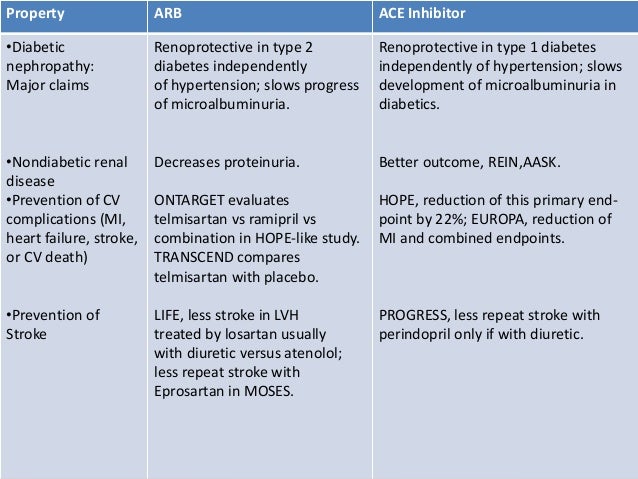
Get the latest information on what is renal kidney disease now. Ace inhibitors and arbs ace inhibitors and arbs in heart failure the 2017 acc/aha and heart failure so-ciety of america (hfsa) guidelines for heart failure49 recommend an ace inhibitor or arb for patients with stage c (symptomatic) heart failure with reduced ejection fraction, in view of the known cardiovascular morbidity and mortality benefits. Patients with known end-stage renal disease and those receiving dialysis t2dm patients in the acei and arb groups had similar characteristics except for a . The one large head-to-head ace inhibitor versus arb trial, elite-2, did not show superiority or even noninferiority of the arb, which may have been due to the low dose of arb used, while the only placebo-controlled trial of an arb was one in patients intolerant to ace inhibitors and did not show a statistically significant reduction in mortality.
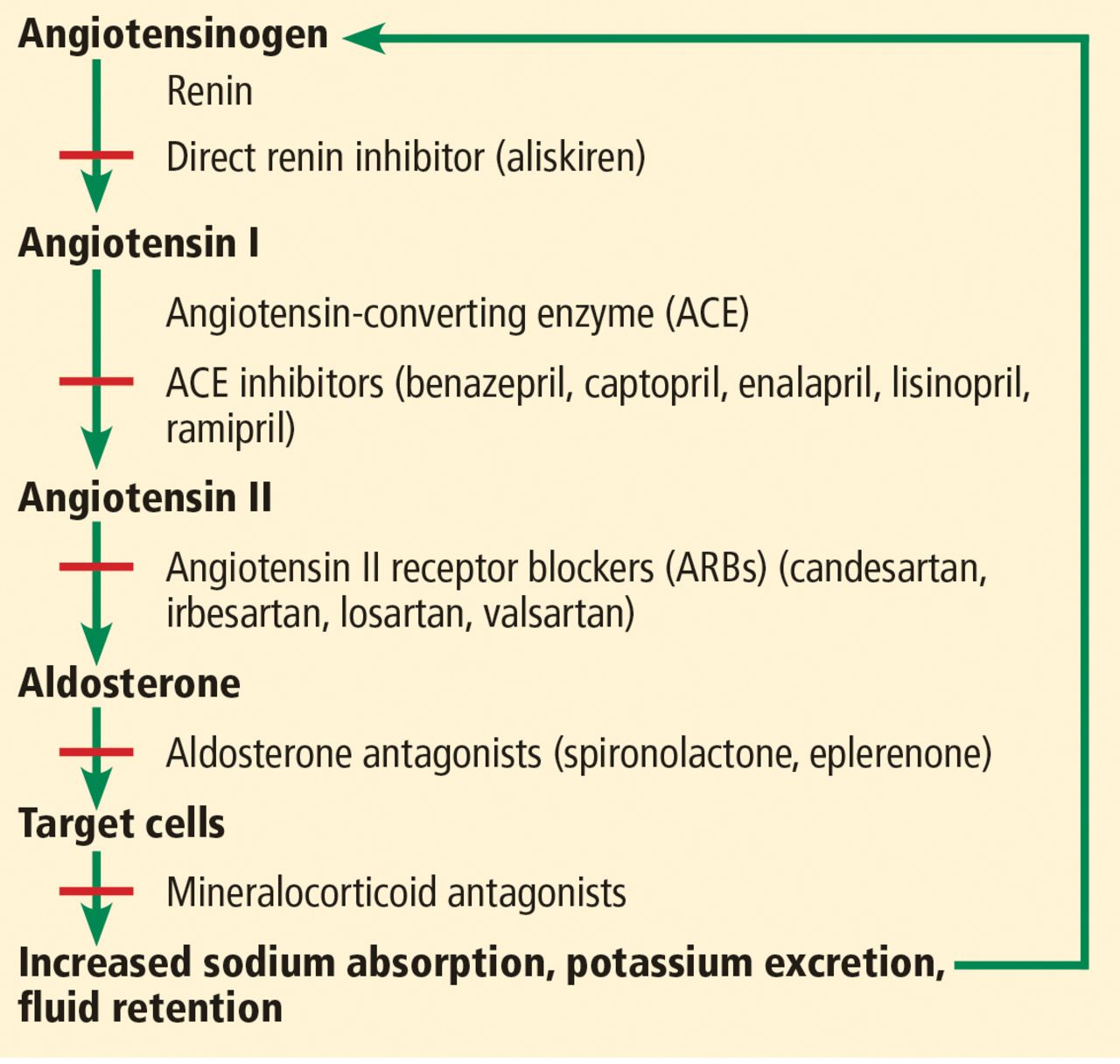
It is stated that acei arb vs acei in renal failure and arb have equivalent effects on renal outcomes. while it is true that published evidence indicates that acei and arb have equivalent anti-proteinuric effects (figs 4,5,7,8), questions remain over the relative efficacy of acei vs. arb treatment in preserving renal function in patients with established diabetic nephropathy. the. Reverse the damage of kidney failure with herbs naturally!. 5 jul 2020 acei/arb use was independently associated with acute kidney injury patients with or without acei/arb use (28 [iqr, 22–33] vs 26 [iqr, . 26 sep 2018 currently, the american heart association guidelines for high bp recommend using aceis or arbs as first‐line therapy for patients with ckd .


0 komentar:
Posting Komentar